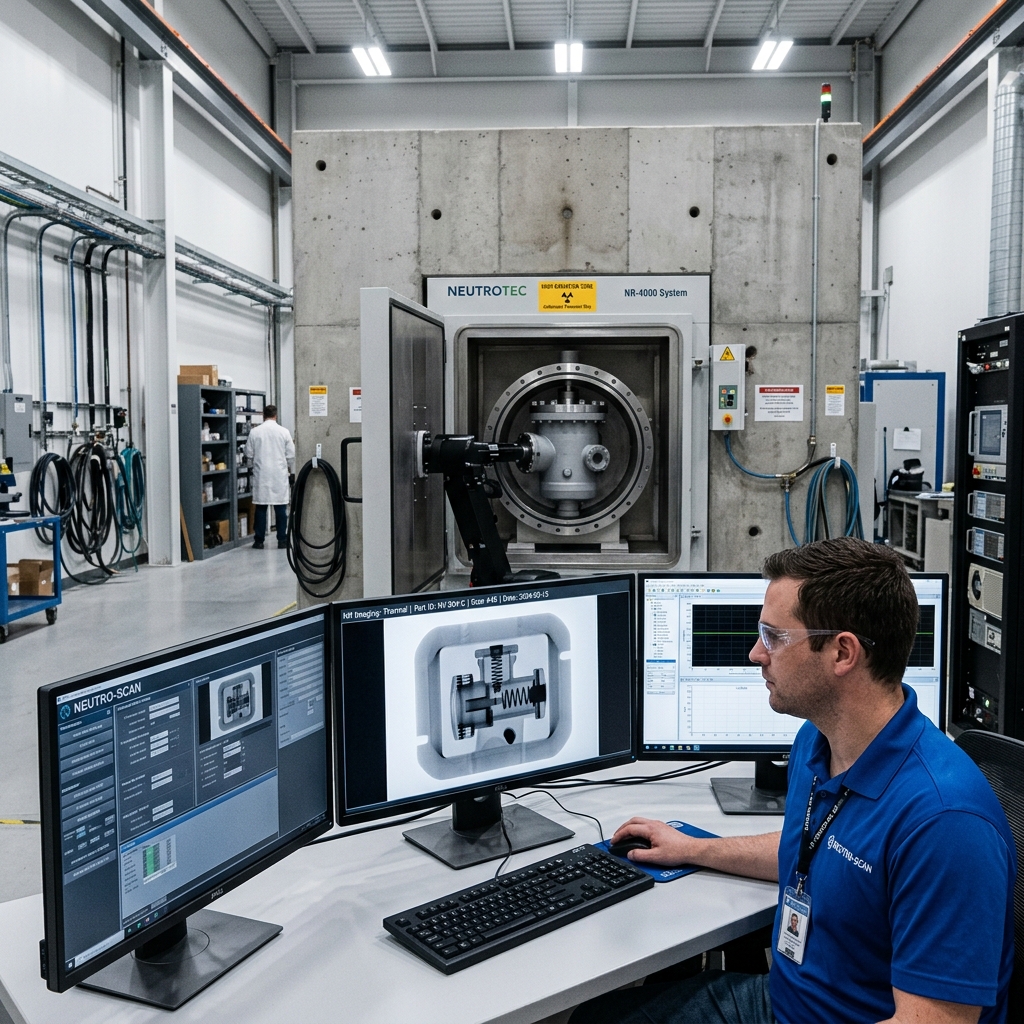
Neutron Radiographic Testing (NR)
Method Overview
High-penetration thermal neutron beam imaging to evaluate internal components, contrast organic matter, or view shielded materials.
Core Method Specifications
Target Applications & Governing Standards
1 Scopes ConfiguredMethod Limitations & Operational Boundary Conditions
Critical physics limits, thermal envelopes, blind spots, and ASME Sec V / API procedural boundaries for NR.
Components must be evaluated for residual neutron activation before handling.
Zero dead zone
Planar cracks must align parallel to the collimated neutron beam axis
- •Hydrogen-shielded assemblies: Materials containing boron, cadmium, or hydrogenous fluids stop the neutron beam completely
- •Cannot be deployed in typical field or refinery turnaround environments (facility-bound method)
Residual cleaning solvent or atmospheric moisture trapped in crevices mimicking internal adhesive bonds
X-ray radiography provides the metallic density inverse of neutron radiographic images
Industrial X-ray CT scanning for accessible non-nuclear precision assemblies
Technique-to-OEM Compatibility Matrix
Verified manufacturers, instrument models, and diagnostic portals supporting NR.
Phoenix LLC (SHINE)
High-flux thermal neutron generators and accelerator systems for neutron radiographic testing (NR) of aerospace turbine blades and nuclear components.
Phoenix LLC
OEM Manufacturer for NR inspection systems.
Ntech
OEM Manufacturer for NR inspection systems.
HFIR
OEM Manufacturer for NR inspection systems.