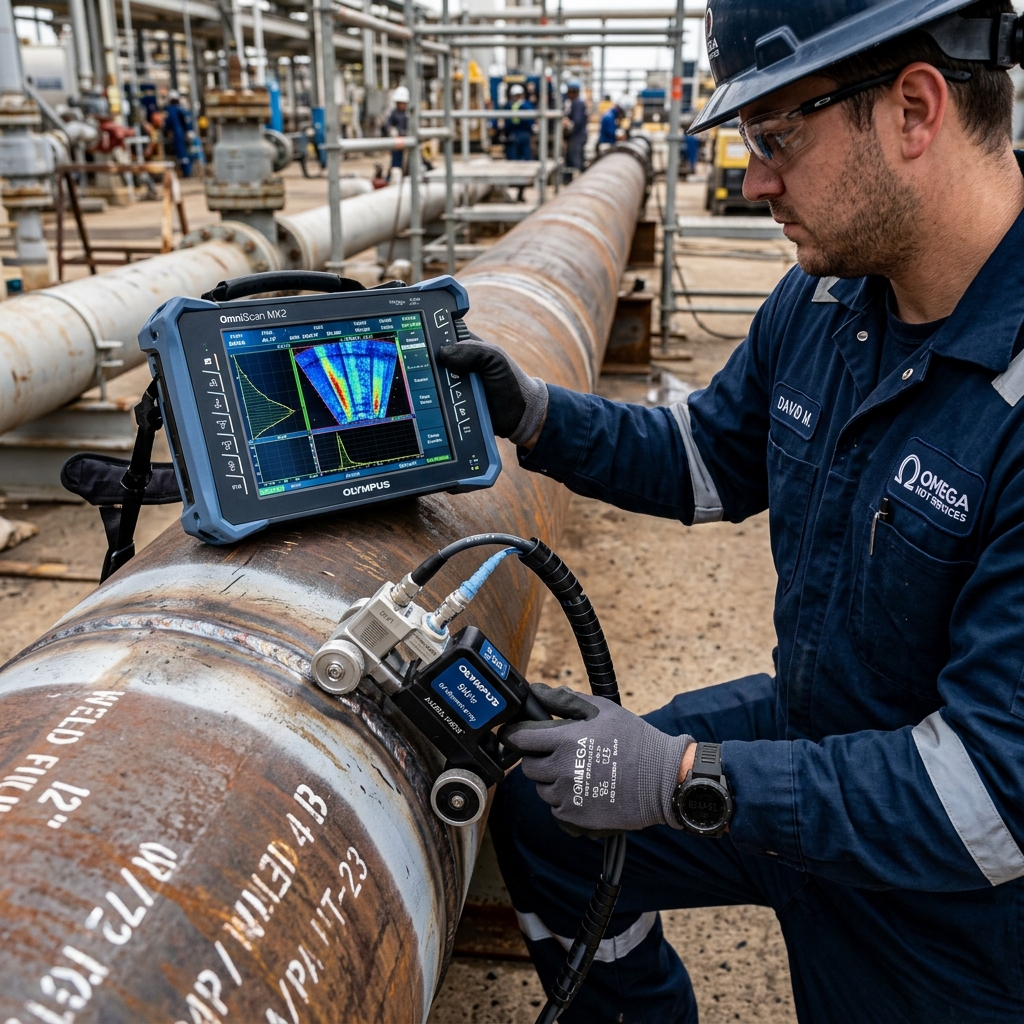
Pressure Safety Valve Testing & Recertification
🐘 Tusker VaultSpecializedSpecialized & Robotic • PSV / PRV

Pressure Safety Valve Testing & Recertification (PSV / PRV)

Method Overview

Comprehensive pop-pressure testing, seat tightness evaluation, and body NDT inspection for Pressure Relief Valves (PRV) and Pressure Safety Valves (PSV).

Core Method Specifications

Technique IDPSV
AcronymPSV / PRV
CategorySpecialized
ModalitySpecialized & Robotic
Standardized Report TemplateISO 17020 Ready
PSV-Standard-TemplateTest in Sandbox

Target Applications & Governing Standards

1 Scopes Configured
Valves & Pressure Control
API 520 API 526 API 527 API 598 ASME Sec VIII
Target Assets / Components:
Pressure Safety Valves (PSV)Pressure Relief Valves (PRV)Control ValvesSafety Relief Valves
Detectable Defects & Anomalies:
• Set Pressure Drift• Seat Leakage• Stem Packing Leakage• Body Casting Corrosion• Internal Spring Fatigue

Method Limitations & Operational Boundary Conditions

Critical physics limits, thermal envelopes, blind spots, and ASME Sec V / API procedural boundaries for PSV / PRV.

Level III Procedure Control
Operating Temp Envelope
Standard Envelope-20°C to +60°C ambient test bench operating envelope
High-Temp CapabilityService temperatures up to 550°C (1022°F) require Cold Differential Test Pressure (CDTP) calculation with thermal correction factors

Spring relaxation and thermal expansion reduce popping pressure at operating temperatures; bench test must apply CDTP multiplier.

Thickness & Dead Zone
Min ThicknessValve orifice sizes D through T per API 526
Max RangePressure ratings from Class 150 to Class 2500 (up to 414 bar / 6000 psi)
Near-Surface Dead Zone

Evaluates seating surface tightness, spring force, and nozzle guide clearances

Surface Condition & Couplant
Roughness & PrepValve disc and nozzle seating surfaces must be lapped to optical flatness (< 3 light bands / 0.9 µm)
Coating ToleranceSeating surfaces must be bare stellited alloy; no coatings permitted on metal-to-metal seat interface
Couplant / Media

Clean dry air, industrial nitrogen (for vapor service), or clean water (for liquid service)

Geometry & Orientation
Orientation Sensitivity

PSVs MUST be tested and installed in vertical upright position. Testing horizontally induces stem friction and invalidates pop pressure

Clearance:Requires removal from line and mounting to certified hydraulic clamp test stand
Critical Blind Spots
  • •Bench pop testing cannot simulate dynamic inlet acoustic pressure drop or backpressure chatter that occurs during plant emergency relief
  • •Thermal galling of valve guiding surfaces that only occurs under high-temperature process fluid flow
False Indication Trap:

Rapid pressure ramp rate on test bench causing premature popping or seat chatter

Recommended Cross-Validation

Fluorescent penetrant inspection of disc seating face and nozzle lip for micro-cracks and scratches

Visual inspection of guide clearances, spring pitting, and bellows integrity

Level III Code Compliance Directive:API 527 and ASME Section VIII require bubble tightness testing at 90% of set pressure with zero bubbles/minute for soft seats and strict counts for metal seats.

Technique-to-OEM Compatibility Matrix

Verified manufacturers, instrument models, and diagnostic portals supporting PSV / PRV.

5 Verified OEMs

Emerson (Farris/Crosby)

OEM Manufacturer for PSV / PRV inspection systems.

Verified Partner

Baker Hughes (Consolidated)

OEM Manufacturer for PSV / PRV inspection systems.

Verified Partner

Leser

OEM Manufacturer for PSV / PRV inspection systems.

Verified Partner

Pentair

OEM Manufacturer for PSV / PRV inspection systems.

Verified Partner

Ventil

OEM Manufacturer for PSV / PRV inspection systems.

Verified Partner